

NHLPA Player Development is no longer limited to what happens after a prospect reaches an NHL dressing room. The strongest signal from the recent research is that the NHL Players’ Association, often working with the NHL and other partners, has pushed development into earlier ages, broader access points, and off-ice education. That does not mean every program will produce NHL players. It does mean the pipeline is being shaped by more than scouting, coaching, and ice time.
As of November 8, 2026, most of the programs in the research record had already taken effect. The useful way to read them is not as a single master plan, but as a set of connected efforts: reduce barriers, prepare young athletes for professional demands, support mental health, and use technology or school-based programs to reach players who may never start in a traditional hockey market.
What NHLPA Player Development Now Includes
The modern development path is broader than a prospect’s skating stride, shot release, or defensive reads. Those still matter, and they always will. The newer NHLPA-linked work points to a wider definition of readiness: health education, transition support, inclusion, mentorship, mental skills, and commercial awareness for players whose identities can become business assets before or soon after they reach the NHL.
Why NHLPA Player Development Starts Earlier
The practical case for NHLPA Player Development starting earlier is straightforward. If young players face pressure before they are fully prepared for professional hockey, then education after they arrive may be too late. The NHL and NHLPA’s Player Orientation Program, held on September 24, 2025, addressed topics such as substance abuse, mental health, sexual harassment awareness, and the transition into professional life for nearly drafted and newly drafted players, according to NHL.com.
That type of programming does not replace team development staffs. It gives prospects common baseline information before their first NHL season, and in many cases before they have played an NHL game. From a team-building standpoint, that matters because a player who understands professional expectations sooner may be better equipped to handle travel, media attention, locker-room standards, and personal conduct questions.
Education Before The First NHL Game
The Player Orientation Program also shows why development has become a shared responsibility. Clubs can teach systems and habits. Agents can support careers. Families can provide stability. The union can help standardize education across the player pool, especially in areas that affect personal well-being and workplace conduct. That shared structure is useful in a league where prospects come from different countries, leagues, junior systems, colleges, and family backgrounds.
There is a caution here. Orientation programs are not proof that every player will be ready for every off-ice situation. Education is a starting point, not a guarantee. Still, the presence of formal instruction before an NHL career begins is a meaningful shift from a development model that once leaned more heavily on informal locker-room learning.
Access, Schools, And Entry Points
The access side may be the most measurable part of the current movement. On April 10, 2026, the NHL/NHLPA Industry Growth Fund reported that more than 43,000 boys and girls joined through Learn to Play in the United States and First Shift in Canada, with programs available across all 32 NHL club markets. That is not a direct count of elite prospects, but it does show how the sport is trying to widen its base before the high-performance funnel narrows.
Street Hockey As A Development Base
On April 27, 2026, the NHL, NHLPA, and SHAPE America announced a partnership to provide a free, standards-aligned street hockey physical education curriculum and equipment grants for U.S. schools from PreK through grade 8, with stated aims that included inclusion, reduced barriers, fundamental skills, teamwork, and confidence, according to the SHAPE America announcement.
For hockey evaluators, that program should be read with care. Street hockey in schools is not the same as elite ice hockey training. It can, though, introduce movement patterns, hand-eye coordination, competition, and team habits to children who might not have access to ice time or equipment. In development terms, the value is not only talent identification. It is exposure.
Camps And Mentorship For Underrepresented Players
The NHL Player Inclusion Coalition’s June 25, 2025 grant to the Black, Silver & Bold program in Los Angeles added another layer. The research record says the $20,000 grant supported a three-day elite youth camp, skill intensives, and mentorship tied to nutrition, psychology, leadership, and off-ice life skills. That blend is notable because it treats player growth as both athletic and personal.
Those details fit a broader point: development access is not only about placing a stick in a player’s hands. It is also about whether a young player can see a path, receive guidance, and learn how to manage the parts of hockey that sit outside the boards. For readers comparing youth pipelines, our related look at NTDP youth development offers a useful U.S. reference point, though the NHLPA-linked programs discussed here focus more on access, education, and support structures.
- Lower-cost entry programs can increase first contact with the sport.
- School-based curricula can build basic skills before ice access is available.
- Mentorship programs can connect skill work with nutrition, psychology, and leadership.
Commercial And Technology Programs Matter
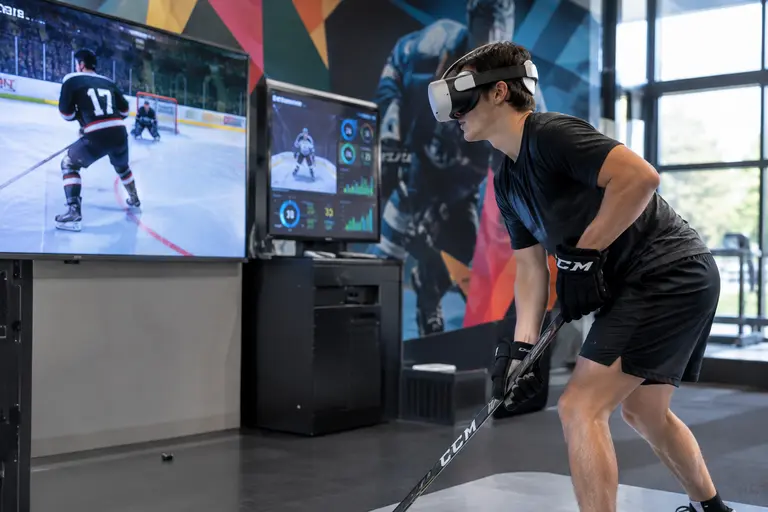
The commercial side of player growth is easier to overlook, but it belongs in the discussion. On June 10, 2026, the NHLPA restructured and rebranded its commercial arm as the NHLPA Player Collective. The research record says the move was aimed at expanding global opportunities for players in licensing, sponsorships, content, merchandise, and intellectual property, including European licensing representation and collaborative apparel deals.
Player Collective And Off-Ice Growth
This is not skill development in the traditional coaching sense. It is career development. Players entering the league now face a public profile that can include content, sponsorship, name-and-likeness value, and international marketing. A union-backed commercial arm gives players a more organized way to understand those opportunities. For younger players, that can affect decision-making and financial education, even if the program’s main function is not on-ice performance.
The same logic applies to mental health support. In January 2025, the NHLPA-expanded First Line initiative was reported in the research record as having expanded to more than 1,000 players in the AHL and ECHL, with peer-to-peer mental health education suited to player roles and challenges. That matters because development does not stop at the NHL draft. Many future NHL contributors spend time in the minors, where pressure, uncertainty, and career instability can be significant.
Innovation Competitions And Scalable Ideas
The NHL and NHLPA also used innovation competitions to draw in student ideas. On November 25, 2025, the 2026 Hockey Innovation Competition with SAP and ESPN’s Take Back Sports initiative was announced for Florida-focused growth ideas. The research record says 63 submissions were received, with proposals in accessibility, fan experience, and education, and final pitches listed for January 22, 2026. Because the research supplied no outcome for that pitch day, the safe reading is that the program generated ideas, not that any specific concept changed the sport.
On May 29, 2026, the NHL, NHLPA, SAP, and Sharks Foundation support structure identified San Jose competition finalists, with six student teams presenting virtually on June 1, 2026. One idea cited in the research was Hockey in a Box, aimed at bringing sports to underserved schools. Readers tracking adjacent equipment design and sports-tech production across our network can use cadcamnet.com as a broader reference point, but the hockey case here rests on whether these ideas can be tested, funded, and repeated at scale.
NHLPA Player Development Takeaway
The best reading of NHLPA Player Development is that it has become a layered system rather than a single program. Youth entry programs widen the top of the funnel. School partnerships introduce basic skills where ice may be limited. Orientation programs address conduct, mental health, and the transition into professional life. Inclusion grants and mentorship efforts target gaps in access and support. Commercial restructuring helps players handle the business side of modern hockey.
What Teams And Families Can Read From It
Teams should not treat these programs as substitutes for drafting well, coaching well, or building strong development staffs. Families should not view participation in any one initiative as a straight path to the NHL. The more realistic value is cumulative. Each program can remove one point of friction: cost, awareness, preparation, support, or confidence.
There is also a scouting caution tied to the 2024 research noted in the materials on Swedish junior and adult player data. That study found early maturation was disproportionately associated with selection for elite Swedish junior national teams, while later maturation correlated with a greater likelihood of reaching the NHL. Its recommendation to use biological maturation measures in talent identification fits the broader theme: better development requires better context, not just earlier sorting.
That is why NHLPA Player Development should be evaluated by its long-term effects, not by a single headline. The NHLPA and its partners have put more structure around the player pathway. The next test is whether those structures consistently help players arrive healthier, better informed, and more prepared for the demands that follow them from youth hockey into the professional game.