

Texas NHL Expansion has moved from a market rumor into a formal evaluation period, and that changes how Houston and Austin should be judged. This is not just a question of whether Texas can support more hockey. It is a test of local fan engagement, arena politics, ownership patience and whether community support can hold up through years of planning before a puck is dropped.
The NHL’s discussion now has a defined structure. On June 23, 2026, the NHL Board of Governors approved a six-month process to evaluate placing a 33rd team in Texas, with the Friedkin family granted exclusive rights to pursue a franchise in either Houston or Austin, according to NHL.com. The reported investment, including expansion fee and arena construction, is about $3.5 billion. That figure frames the fan question in a more serious way: civic enthusiasm matters, but so does the ability to sustain support through a large venue project and a long launch window.
Why Texas NHL Expansion Is Being Taken Seriously
Texas NHL Expansion And Market Order
The league’s early order of preference matters. Deputy commissioner Bill Daly said on August 21, 2026, that Houston was the priority market and Austin was the secondary option, with definitive agreements possible by December 2026 and a franchise launch targeted as early as the 2029-30 season, as reported by Sportsnet. That timing gives both cities a runway, but it also exposes a risk: keeping public interest warm for multiple years before opening night is harder than generating a burst of reaction around a news cycle.
Houston’s priority status appears tied to scale, sports culture and the city’s ability to support major events. Austin’s case leans more on growth, novelty and a professional sports market that has expanded its ambitions. The contrast is useful because both cities can be attractive without being equal in the league’s internal ranking.
The Cost Side Of The Fan Question
For Texas NHL Expansion to become more than an exploratory file, the fan base must translate into a business base. Season-ticket deposits, sponsorship demand, suite interest and public acceptance of arena plans are likely to matter more than casual approval. A $3.5 billion estimated investment raises the bar. A city can like the idea of an NHL team and still resist the venue terms that make the project work.
That is why engagement cannot be measured only by social media buzz or isolated fan quotes. The stronger signal is whether civic leaders, business groups, youth hockey families and existing sports consumers align around a long-term plan. Our prior breakdown of Houston and Austin market readiness fits the same issue: the best market is not simply the biggest one, but the one that can turn interest into durable support.
Houston’s Engagement Case
Survey Support And Civic Backing
Houston has a clearer public-support data point. A University of Houston survey published in June 2025 found that 57% of Houstonians were either very enthusiastic or somewhat enthusiastic about bringing an NHL team to the city. The same survey found 20% were not too enthusiastic and 23% were not at all enthusiastic. That split is encouraging, but not unanimous. It suggests a market with real upside and a meaningful group that would still need to be persuaded.
As of October 7, 2026, support in Houston’s sports and political circles had increased, with key city and regional stakeholders, including officials connected to Houston’s Sports Authority, publicly backing the possibility of an NHL franchise. That matters because expansion is rarely carried by fan interest alone. Arena projects, transportation concerns, commercial partnerships and event scheduling all require local cooperation.
A Market With Old Hockey Memory
Houston also has hockey memory, even if it does not have an NHL building ready for use. The city’s AHL franchise, the Aeros, folded in 2013. That history cuts both ways. It gives the market an existing hockey reference point, but it also shows that professional hockey in Houston has already faced business limits at a lower level.
Texas NHL Expansion is not being judged against the old AHL model, though. The NHL’s question is whether a top-tier club, backed by major ownership and a new or upgraded venue plan, could activate a broader audience. The Dallas Stars have shown that NHL hockey can have a strong place in Texas. Houston’s pitch is that the state can support more than one top-level hockey identity.
Austin’s Community Signal
Excitement Without A Building
Austin’s case has a different texture. Local reaction has included excitement about seeing real NHL games in the city, with residents noting the novelty of a major hockey franchise in a market that does not already have one. The Austin Sports Commission’s executive director, Nathan Kopp, said in late June 2026 that the commission was not directly involved in the NHL discussions but would support adding a team to Austin’s professional sports ecosystem.
The challenge is that enthusiasm is still not the same as readiness. Austin, like Houston, lacks an NHL-sized arena facility as of October 10, 2026. That makes venue planning the central question. A club cannot be sold only as a civic badge; it needs dates, revenue streams, premium seating, practice infrastructure and a building plan that does not alienate the same community it hopes to attract.
How Minor-League Proximity Helps
Austin’s hockey background includes the Ice Bats, who played until 2008, and the nearby Cedar Park facility used by the AHL’s Texas Stars. That gives the region some hockey familiarity, even if the NHL would be a different scale. The nearby AHL presence may help normalize the sport for families and youth players, while also giving the league a read on local hockey habits.
The Austin argument is less about replacing an old major-league team and more about building a new habit. That can be powerful in a fast-growing market, but it also requires discipline. If ticket prices, arena location or transportation plans feel disconnected from local fans, early goodwill can fade before the franchise starts play.
Arena Plans And Local Trust
The Dallas Reference Point
The Dallas Stars remain the strongest proof that NHL hockey can matter in Texas. As of early June 2026, the Stars announced a non-binding letter of intent to build a new arena and entertainment district in Plano by 2031, moving away from their current home at American Airlines Center. That plan points to a different issue for Houston and Austin: hockey growth in Texas is not theoretical, but it is increasingly tied to real estate, mixed-use development and local approval.
Dallas gives the NHL a Texas success story, but it also raises expectations. A second Texas club would be compared to a franchise with an established fan base and a long-standing NHL identity. Houston or Austin would need to create its own community roots rather than rely on the state’s broader sports reputation.
Why Infrastructure Shapes Patience
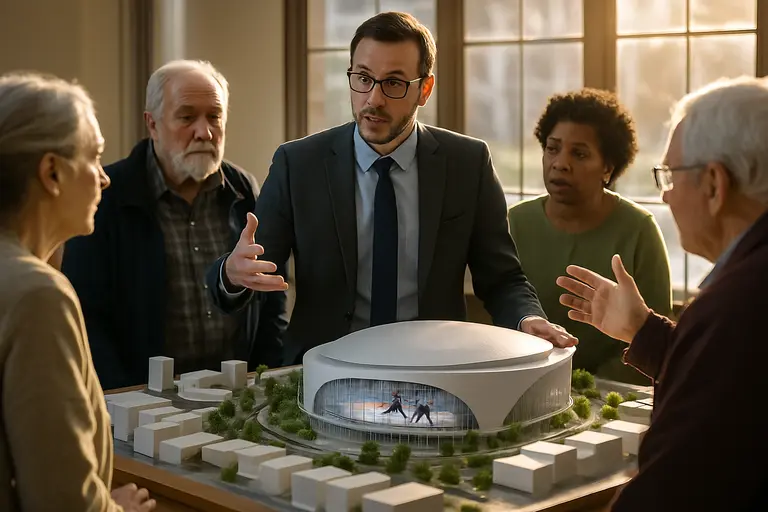
Arena uncertainty can test fan engagement before a team exists. Supporters may be eager for NHL games, but they also want clarity. Where would the team play? How would the building be funded? Would the arena serve concerts and other events? Would access be manageable for families and regional fans?
Those questions are not side issues. They shape whether casual interest turns into season-ticket demand. They also affect how local media covers the project. A clean venue path can build momentum; a divisive one can make the franchise feel like a political fight rather than a sports opportunity. For readers interested in how communities rally around their venues and events, Bass Lake Roadhouse captures a similar appreciation for local gatherings against a backdrop of broader engagement.
What Texas NHL Expansion Means For Fan Support
The Engagement Standard
If Texas NHL Expansion reaches a definitive agreement stage by December 2026, the next measure should not be noise. It should be commitment. Houston’s survey support and stakeholder backing give it a stronger public foundation. Austin’s excitement and growth profile give it a credible, if less advanced, community case. Both still face the same hard test: converting curiosity into paid support and long-term local identity.
The NHL has used recent southern expansion markets such as Seattle and Las Vegas as reference points for engagement and sustainability discussions. That is sensible, but Texas will not be a copy of either model. Houston would enter as a large, established sports city trying to reclaim hockey at a higher level. Austin would enter as a growth market trying to make NHL hockey feel native from the start.
The most useful read is cautious optimism. The league has a process, the ownership path has a name, and both cities have reasons to believe a team could matter locally. The unresolved issues are large: arena plans, market priority, political support, corporate demand and the patience required before a possible 2029-30 launch. If those pieces align, Texas could become a two-team NHL state in a way that feels earned rather than assumed.