

SAP Center upgrades are not only a facilities story for the San Jose Sharks. They are a fan-experience story, too, because arena video sets the rhythm between shifts, during reviews, through promotions, and in the minutes when supporters move from concourse to seat. The 2026-27 season has brought renewed attention to that relationship, with the Sharks placing part of their “Teal Reimagination” around digital presentation, retail-adjacent media, and a building that already had a major center-hung system installed in November 2022.
The caution here is useful: not every screen change alters how hockey feels in the bowl. A larger display can help sightlines and replays, but it can also become background noise if content is poorly timed. In San Jose, the supported facts point to a two-part pattern. First, the 2022 Daktronics center-hung board gave the arena a clearer in-bowl video base. Second, the 2026-27 enhancements extend digital touchpoints into entry and concourse movement, especially around the expanded Sharks Pro Shop.
What SAP Center upgrades Changed In The Bowl
SAP Center upgrades And The Center-Hung Board
The most concrete video change in the recent past came in November 2022, when SAP Center introduced a seven-display center-hung video board system from Daktronics. The system included four main video screens, a 197-foot circumference ring display, two under-belly displays, and ribbon displays around the seating bowl, according to Daktronics’ project note. That matters because hockey spectators do not all consume replays from the same angle. A fan high in the ends, a family in the lower bowl, and a supporter under the board are often relying on different display surfaces.
The four main screens were listed at about 23 feet high by 41 feet wide, while the halo display is nearly 10 feet tall around the board’s 197-foot circumference. The under-belly screens were about 10 feet high by 16.5 feet wide. All seven center-hung displays used 5.9-millimeter pixel spacing, a technical detail that points toward sharper imagery than older, wider-pitch boards. The seating-bowl ribbon display, at more than 3 feet high and about 920 feet long with 15-millimeter spacing, gave the building another tool for crowd prompts, sponsor content, statistics, and in-game atmosphere.
Why Hockey Needs Multiple Display Angles
Hockey is a fast sport in a relatively compact visual field. The puck can disappear into traffic, a deflection can decide a goal, and a penalty explanation may need replay support for the crowd to understand why play stopped. The value of the SAP Center video board is not just size; it is distribution. Main boards help the broad audience. Under-belly boards support seats close to center ice. Ribbon boards fill dead time without forcing every eye upward.
That distribution also helps community behavior inside the arena. Fans react together when a replay confirms what they thought they saw, or when the board gives context to a stoppage. That shared reading of the game can reduce confusion and lift noise at the right moments. The technology does not create hockey culture by itself, but it can shape how quickly a crowd becomes one audience instead of thousands of separate viewers.
Concourse Screens And Fan Flow
The 2026-27 Media Screen Near The Pro Shop
For the 2026-27 season, the Sharks said an expanded media screen would be installed above the new, three-times-larger Sharks Pro Shop, with the store targeted to open in late November 2026, according to the team’s official season update. As of October 29, 2026, that timing makes the store-area screen a near-term addition rather than a completed, season-long fixture. The key point is placement: a screen above a main concourse destination reaches fans before they reach the seating bowl and after they leave it.
This kind of placement can serve several sports-focused purposes. It can carry team video, direct attention toward retail, and give late-arriving fans a sense of the night’s presentation before they scan the ice. It may also reduce the feeling that the arena experience begins only after a spectator finds a seat. In a building with strong local identity, those transitional areas matter. They are where friends meet, families regroup, and visiting supporters form early impressions.
Pendant Displays And The Out-Of-Seat Experience
The 2022 Daktronics project also included six pendant narrow pixel-pitch displays around the concourse, each about 4.5 feet high by 12 feet wide with 2.5-millimeter pixel spacing. That detail is easy to miss because the center-hung board gets most of the attention. Yet concourse displays may be more useful during intermissions, entry windows, and food or merchandise runs, when fans are away from direct ice views.
The best case for these screens is not that they replace the live event. It is that they keep spectators tied to the game environment while they move through the building. That can help maintain energy between periods and support the communal feeling that makes an NHL night distinct from watching at home. Similar venue debates appear around the league, including how hockey culture changes with stadium upgrades when boards, sound, and concourse tools shift the rhythm of a night.
What The Enhancements Mean For Sharks Culture
Technology As A Support, Not The Main Event
The safest reading of these SAP Center upgrades is that they support the Sharks’ live product rather than define it. The crowd still responds most strongly to goals, saves, hits, power plays, and the emotional swings of a close third period. Screens help frame those moments, especially when the building can show a replay clearly and quickly. But the cultural value depends on restraint as much as power. A board that constantly interrupts the ice can work against the sport’s natural tension.
San Jose’s case is also interesting because the video system was not introduced all at once in 2026-27. The major in-bowl board arrived in 2022, and the current phase adds new public-facing media in other parts of the arena. That staged pattern gives fans time to adjust. It also lets the team build a more connected venue experience without relying on one single visual centerpiece to carry every part of the night.
Community Touchpoints Around The Arena
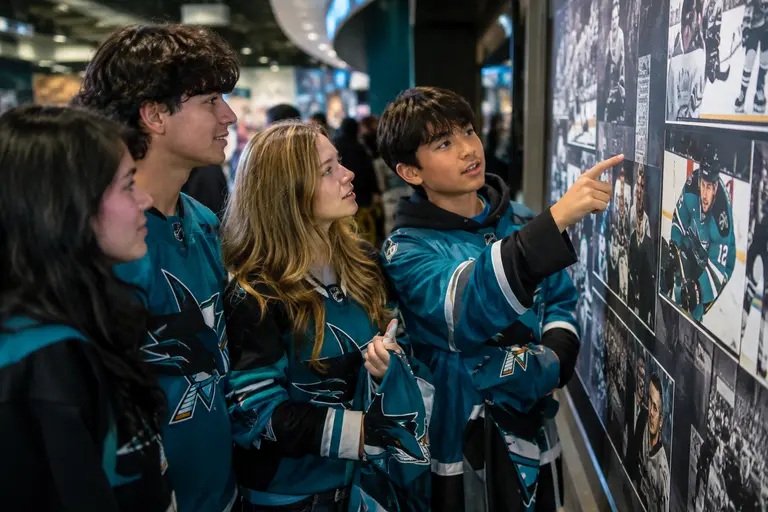
Fan experience is often discussed as if it were only about comfort or spectacle. At hockey arenas, it is also about repetition. Supporters learn where they enter, where they meet friends, which concourse screens show useful content, and when to return to the bowl before puck drop or a period restart. An expanded media screen near a larger team store fits into that pattern because it sits at the intersection of movement, identity, and spending time with other fans.
There is also a network effect among sports audiences. When considering broader sports culture comparisons across the same network, a related site within the same network can provide insights into how these changes influence the overall fan experience without shifting the spotlight from the game itself.
SAP Center Enhancements And The Sharks Fan Experience
The evidence supports a measured conclusion: SAP Center upgrades have improved the technical foundation for Sharks game presentation, especially through the seven-display center-hung system installed in 2022 and the continued 2026-27 push into concourse and retail-area media. The clearest benefits are replay visibility, distributed display access, and a stronger out-of-seat connection to the event.
There are still limits to what can be claimed. The research does not prove that these changes increased attendance, changed game outcomes, or altered fan satisfaction by a measured percentage. Those would require separate data from surveys, ticketing, or building operations. What can be said is that the Sharks have invested in display surfaces that match several known demands of live hockey: fast information, shared reaction, and a building-wide sense of participation.
For a fan walking into SAP Center on October 29, 2026, the most visible experience is not one single screen. It is a layered system: the center-hung board above the ice, ribbon displays around the bowl, pendant screens in the concourse, and a planned media screen tied to the expanded Sharks Pro Shop targeted for late November 2026. That mix gives the Sharks more ways to connect game action with arena life. If used with discipline, it can make a night at the rink feel clearer, more communal, and more distinctly San Jose.