

Sage Rink Renovations at Hamilton College have reached the point where preservation and performance are being tested at the same time. The project is not just about refreshing an old building. Sage Rink first opened in 1921, and Hamilton identifies it as the second-oldest college hockey barn in the United States, which gives every facilities decision a hockey and heritage angle. The challenge is to modernize the ice plant, boards, glass, locker rooms, and fan areas without stripping away the rink identity that makes the building different from a newer college arena.
As of October 13, 2026, the project should be evaluated as a multi-phase effort, not a single finished renovation. Phase I was completed in September 2025 after Hamilton invested $13 million since 2022, according to Hamilton’s renovation update. Phase II began in the summer 2026 window and, based on the latest project status provided, remained ongoing on October 13, 2026. That timing matters because the on-ice improvements can already be judged more clearly than the new team-area work.
Why Sage Rink Renovations Matter Now
Preservation Sets The Terms
The age of Sage Rink changes the way this project should be viewed. A newer venue can often be assessed through capacity, premium spaces, and video upgrades alone. A 1921 rink requires a different standard. The building’s value is tied to its long use as a hockey home, so changes that improve daily team operations must still respect the character of the facility.
That is why the most relevant question is not whether Hamilton can make Sage Rink look like a recent-build arena. It is whether the college can raise the hockey standard inside a building that still feels connected to its original identity. The early phases suggest a practical order of operations: fix the rink systems first, then address player areas, then move toward broader fan amenities.
Sage Rink Renovations And Competitive Function
Sage Rink Renovations also matter because small facility differences can affect the rhythm of college hockey. Ice consistency, boards, glass, and locker-room setup are not background details for players and coaches. They shape practice quality, puck movement, recovery routines, and how efficiently a staff can run a game-day operation.
Hamilton’s public materials do not provide every technical measurement, so caution is needed before assigning too much impact to any single upgrade. Still, the list of Phase I work points toward a clear priority: make the rink more reliable as a hockey surface before expanding the experience around it. That is a sound sequence for a program trying to protect an old venue while improving the daily setting for athletes.
Phase I Set The On-Ice Foundation
Ice, Boards, Glass, And Flow
Phase I included upgrades to the building envelope and roof, major mechanical and HVAC system improvements, a new refrigeration system and ice surface, and new state-of-the-art boards and glass. Those are not cosmetic changes. For hockey, they sit close to the center of performance because the quality and predictability of the ice can influence speed, puck handling, and practice repetition.
The renovated features were designed to improve ice consistency, increase the speed of play through modern corner design, and use taller glass to reduce stoppages while improving spectator viewing around the rink. The Sage Rink Renovations therefore addressed the game surface before turning to the more visible fan-facing additions planned for later phases.
The corner design detail is especially relevant. Modern corners can change how quickly teams retrieve pucks, exit the zone, and sustain forecheck pressure. That does not mean every Hamilton game will suddenly play faster, but the facility is less likely to be the limiting factor. In a historic rink, that is a meaningful step: the old shell remains, but the boards and ice system move closer to contemporary expectations.
Why The Systems Work Comes First
Building-envelope, roof, HVAC, and refrigeration upgrades are not as easy to market as new seating or a new viewing gallery. From a hockey operations standpoint, they are often more important. Poor climate control and an aging ice plant can create inconsistent conditions. Hamilton’s first phase indicates that the school addressed the parts of the rink that support the playing surface before expanding comfort areas elsewhere.
That sequencing also helps preserve the building. A historic rink cannot simply depend on nostalgia if its core systems are outdated. By pairing envelope and roof work with mechanical and ice upgrades, Hamilton tackled both protection of the structure and the function of the sheet. For comparison, other venue projects have followed similar logic, where foundational rink work comes before broader presentation changes, as seen in our rink renovation analysis.
Player Amenities Drive The Second Phase
Locker Rooms And Coaching Spaces
Phase II is centered on men’s and women’s locker rooms, coach offices, and a conference room. Hamilton’s materials describe this phase as tied to priorities identified by the men’s and women’s hockey coaches, with the aim of preserving Sage Rink’s character while bringing facilities up to modern standards. The college also received nearly $2 million in state grant money for the upcoming renovation work, according to the state grant announcement.
The Sage Rink Renovations should not be judged only by what spectators see from the stands. Locker rooms and coach offices shape the daily hockey environment. They affect how teams prepare, review, meet, and reset between sessions. A conference room can also support team meetings and staff planning in ways that older rinks were not originally designed to handle.
Timeline And Season Impact
Hamilton’s plan placed Phase II construction in the summer 2026 window, with a target of completion before the fall 2026 semester. The project status available for October 13, 2026, described Phase II as ongoing, so it should not be treated as fully finished unless Hamilton issues a later completion notice. That distinction matters for fair analysis.
The college also stated that Phase II did not impact the 2025–26 hockey season because the work was planned for the summer period and prior to fall 2026 activities. That scheduling choice reduced the risk of interrupting games or practices during the completed season. For broader venue tracking across the same publishing network, Efficient Directory offers a related sports directory to help readers follow facility topics without distracting from the core hockey analysis.
Fan Areas Remain A Later Priority
Planned Seating And Viewing Changes
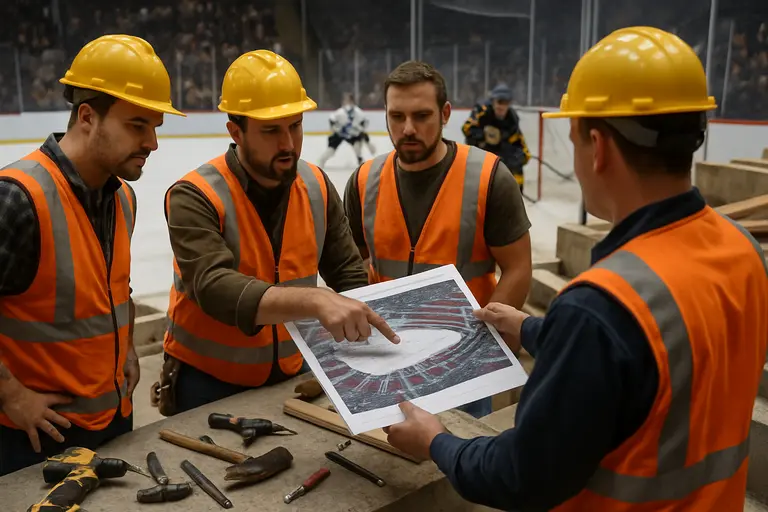
Later phases are expected to focus more directly on the spectator side. Planned items include additional seating with unobstructed views, a special guest box, a lobby addition, a new viewing gallery, an elevator, enhanced concessions, and modernized restrooms. Those upgrades would address common pressure points in older rinks, especially sightlines, circulation, accessibility, and game-night comfort.
The list also shows why the project is being staged. Fan amenities are meaningful, but Hamilton appears to have placed playing conditions and team spaces first. From a hockey-first perspective, that order is defensible. A rink can feel better on game night after a lobby or concessions upgrade, but the team benefits most when the ice, boards, glass, locker rooms, and staff spaces are brought to standard.
- Phase I, completed in September 2025, focused on the rink shell, systems, ice, boards, and glass.
- Phase II, ongoing as of October 13, 2026, focuses on locker rooms, coach offices, and meeting space.
- Future phases are planned to add seating, viewing, lobby, concession, restroom, and accessibility improvements.
Historic Feel Versus Modern Expectations
The key risk in any historic rink renovation is going too far in either direction. If the project protects the building’s look but leaves athletes with outdated daily facilities, the rink becomes more museum than competitive home. If the project strips away the original feel in pursuit of a modern template, it loses the identity that made it worth preserving.
Hamilton’s phased plan appears built around that tension. The school has not presented Sage Rink as a blank-slate rebuild. Instead, the publicly described work keeps the 1921 building in use while replacing or improving parts that most directly affect hockey function. That is a careful path, and the later fan phases will be the next test of whether the building can become more comfortable without feeling generic.
What Sage Rink Renovations Mean For Hamilton Hockey
A Practical Upgrade, Not A Rebrand
The best read on Sage Rink Renovations is that Hamilton is trying to make an old rink work better rather than make it look like everyone else’s. Phase I already addressed the major on-ice infrastructure. Phase II is aimed at player and staff spaces. Later work is planned for fan comfort and access. That order reflects a hockey operations priority, not just a public-facing construction plan.
There is still uncertainty because the multi-phase project depends on design, construction progress, and future fundraising for Phases III and IV. Public information does not yet provide enough detail to measure the finished effect of every space. What can be said is that Hamilton has already invested heavily in the core rink systems and is continuing with a plan that ties modern amenities to the rink’s historic identity.
For players, the most meaningful gains are likely to come from the combination of a more consistent ice surface, updated boards and glass, and improved team areas. For spectators, the larger changes are still tied to later phases. For the building itself, the main achievement so far is that Sage Rink remains a working hockey venue more than a century after opening, with upgrades aimed at keeping it useful without erasing why it matters.