

The Ball Arena renovation gives Denver sports fans a clear list of building upgrades, but it leaves one of the loudest in-arena questions unanswered: whether the jumbotron and scoreboard experience will improve. Based on public announcements available on November 3, 2026, the $135 million project focuses on entry flow, concourses, premium spaces, escalators, point-of-sale technology, and the East Atrium. It does not publicly promise a new center-hung scoreboard, a new jumbotron, or a major LED display upgrade.
That gap matters because the fan experience inside an NHL arena is not only about sightlines to the ice. It is also about how quickly people can read the clock, penalties, player lines, shots, replays, and in-game context. For Colorado Avalanche games, the scoreboard is part of how the crowd tracks pace and reacts together. When that information feels hard to read, the building can still be loud and engaged, but the shared rhythm of the night becomes less clear.
Ball Arena Renovation Scope And The Missing Screen Promise
What The Public Plan Actually Covers
The official plan said Ball Arena would receive a $135 million upgrade that includes an expanded East Atrium, a reimagined entry façade, wider concourses, new escalators, premium club additions, upgraded point-of-sale technology, and work intended to reduce congestion. The same announcement said the project would be phased, with full completion targeted for the 2028-29 NBA and NHL seasons, according to the official Nuggets announcement. That is a major facility commitment, but the listed items point more toward movement, access, hospitality, and purchasing than toward the in-bowl video system.
Suites are part of the early work. The 100-level “Legacies” and 200-level “Signature Suites” were already being renovated and were set to open for the 2026-27 season. Publicly, though, those suite upgrades were not described as video-board projects. That distinction is useful. Premium seating can change how a portion of fans experience a game, while scoreboard clarity affects nearly every fan in the seating bowl.
Why Ball Arena Renovation Does Not Equal A New Jumbotron
For fans who mostly track venue news through renderings, the absence of scoreboard language can be easy to miss. Renderings and summaries centered on entrances, clubs, concourses, and façade changes. They did not list a new center-hung board, revised resolution, larger LED displays, or a new in-arena video system. A September 18, 2026 report also said official statements made no reference to replacing or upgrading the scoreboard, as reported by The Denver Gazette.
That does not prove display work will never be added. Arena projects can shift as construction phases move forward, and teams sometimes announce presentation upgrades separately from building work. Still, as of November 3, 2026, the safest reading is narrow: the Ball Arena renovation confirms major fan-flow and hospitality upgrades, not a jumbotron replacement.
Why The Jumbotron Question Matters For Hockey Crowds
Readable Information Shapes Game Flow
Hockey asks fans to process action quickly. Line changes happen fast, penalties can reshape a period, and a shot or deflection may require a replay before many fans understand what happened. A clear scoreboard helps keep the crowd aligned with the game. Time remaining, penalty time, player identification, and shots on goal are not decorative details. They are part of how a fan reads the night.
Public fan complaints after the 2026-27 opener and early games focused on readability: time remaining, lineups, small font sizes, and graphics that some posters felt emphasized sponsor or presentation elements over basic clarity. Those comments were anecdotal and came from public online discussion, not formal survey data. Even so, they point to a real issue in venue culture: fans judge arena technology by whether it helps them follow the game, not only by whether it looks busy or modern.
Community Energy Depends On Shared Cues
A hockey crowd becomes a community through shared cues. A replay, a goal announcement, a penalty display, or a late-game clock shot tells thousands of people what moment they are in together. If the visual presentation is hard to read from parts of the bowl, the arena loses some of that common language. That is why the Ball Arena renovation discussion has stretched beyond architecture. It has become a question about how Denver’s basketball and hockey crowds receive information once they are inside.
There is a useful split here. Wider concourses and new escalators can reduce friction before puck drop and during intermissions. Better point-of-sale systems can cut some purchase delays. Premium spaces can serve fans who want a more controlled hospitality setting. The jumbotron, though, sits at the center of the bowl experience. It reaches season-ticket holders, families, single-game visitors, and out-of-town fans at the same time.
Fan Experience Gains That Are Confirmed
Movement, Entry, And Intermission Pressure
The confirmed project scope still has real value. If the East Atrium expansion and concourse widening work as intended, fans should see less crowding in key circulation areas. New escalators can matter in a multi-level arena, especially during the rush before puck drop, after periods, and at the end of games. Upgraded point-of-sale technology is also tied to fan experience because long lines can pull people away from the game itself.
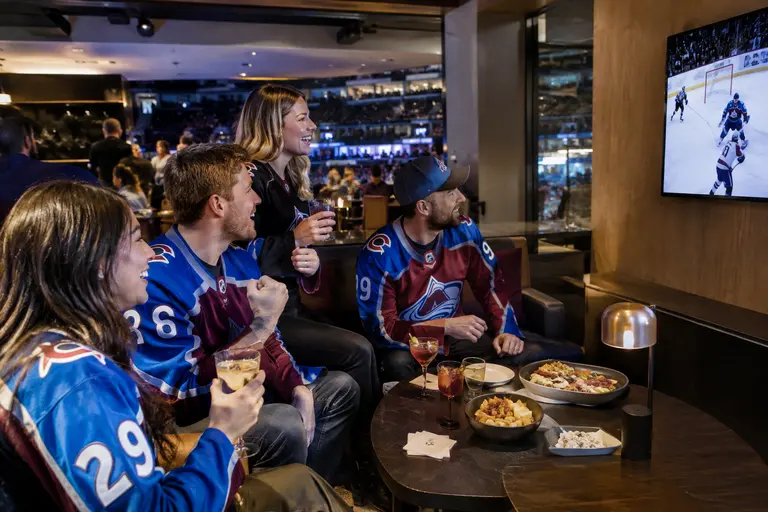
For Avalanche nights, those changes can affect how the building feels even without a scoreboard upgrade. A smoother entry sequence can lower stress before the anthem. Better concourse flow can make intermission more functional. Less congestion can help families, older fans, and visitors who do not know the building as well. For a related hockey-specific read, Dashers Hockey has also examined how the same project could shape Avalanche home nights.
Premium Work Versus Bowl-Wide Benefit
The suite renovations bring a different kind of benefit. New premium clubs and suites can strengthen the business side of the building, which matters for a venue that hosts NBA, NHL, concerts, and other events. But from a sports-culture view, the most meaningful improvements are the ones that touch the broadest group of fans. A scoreboard upgrade would fall into that category if it were announced. So would concourse and entry improvements if they reduce the pinch points many fans feel on game nights.
That is where caution is needed. It would be easy to treat any nine-figure arena project as proof that every fan-facing issue is being addressed. The available information does not support that claim. The confirmed work improves parts of the trip to and through the arena. The in-seat visual presentation remains an open question.
What Denver Fans Can Read From The Ball Arena Renovation
Separate Confirmed Upgrades From Hopes
The cleanest interpretation is that Denver fans should separate what has been announced from what they want next. The Ball Arena renovation has a defined public scope: façade, East Atrium, concourses, escalators, point-of-sale technology, clubs, and suites, with phased completion targeted for the 2028-29 NBA and NHL seasons. It does not, as of November 3, 2026, include a confirmed scoreboard replacement.
That distinction does not make the project small. It does mean the jumbotron conversation should continue on its own terms. If fan complaints about readability persist, the issue will be less about whether the building is receiving investment and more about whether that investment reaches the central game-viewing experience. For hockey in particular, clear visual information supports the crowd’s shared understanding of the game.
Denver’s venue story is now a two-track story. One track is the announced $135 million construction plan, which should reshape how people enter, move, buy, and gather inside Ball Arena. The other is the unresolved scoreboard question, which remains central to how fans follow the action from their seats. Readers interested in broader context of venue upgrades across the network of related sports properties can also find more details at Wikiapp. Until a public display upgrade is confirmed, the responsible view is simple: this project improves many parts of the building, but it does not yet answer the jumbotron concern.