

Ball Arena Renovation is no longer just a facilities story for Colorado Avalanche fans. It is now tied to how supporters see the ice, read the jumbotron, move through the building and decide whether a packed hockey night still feels worth the time. As of November 1, 2026, the renovation plan had already been announced, and the early attendance signals in the research notes pointed to a building operating at or slightly above listed seated capacity during late October Avalanche home games.
That creates a useful tension. Colorado does not appear to be chasing basic demand from an empty building. The more pressing question is whether the arena can protect demand by improving the parts of game night that shape memory: entry, sight lines, screen readability, concession time and the sense that fans are connected to the action rather than working around the venue.
Why Attendance Changes The Jumbotron Debate
The Avalanche attendance snapshot in the research notes showed an average of about 18,099 fans per home game through late October 2026, compared with a listed seated capacity of 17,809. That suggests standing-room inventory helped push utilization above 100 percent. A late-October home game against the New Jersey Devils was also listed in the research notes near 18,101. Those figures should be treated as a short early-season sample, not a full-season attendance claim, but they still matter for the renovation debate.
Capacity Pressure And Fan Patience
When a hockey building is full, small frictions feel larger. A fan leaving an upper-level seat for concessions can miss a shift, a goal review, a power-play timer or a lineup graphic. That matters more in hockey than in many slower-paced sports because the emotional rhythm of the event comes in short bursts. If the jumbotron or corner screens are hard to read, fans away from direct views of the ice lose part of the shared arena language.
The research notes cite fan complaints from October 2026 about text size, power-play countdown visibility and cluttered in-arena graphics. Those are anecdotal, not a scientific survey. Still, they fit a familiar pattern in older or heavily used arenas: the issue is rarely only the central board. It is the whole system of screens, angles, timing and crowd movement.
Why Full Houses Raise The Standard
Strong attendance can mask comfort problems for a while. It can also raise expectations. Fans who keep filling the building may still ask for better visual access, faster movement and clearer in-game information. In that sense, the jumbotron debate is not separate from attendance. It is one of the ways a team protects the value of being there in person.
For a sports-community lens beyond Colorado, Texas Sportsmen provides insights into how teams and fan bases connect around live events, highlighting broader trends that extend beyond simple gate counts and into cultural identity. That wider context is useful because arena attendance is not just a gate count. It reflects habits, family budgets, regional identity and the social pull of gathering around a team.
Ball Arena Renovation Screen Questions
Ball Arena Renovation plans were formally announced on September 18, 2026, with Kroenke Sports & Entertainment outlining a $135 million phased project, according to the Nuggets renovation announcement. The announced work included premium spaces, concourse changes and entry improvements. For Avalanche nights, the jumbotron question sits inside that larger arena plan rather than standing alone.
Ball Arena Renovation And Readability
Ball Arena Renovation does not need to be judged only by whether the center-hung board becomes larger. A modern hockey presentation depends on whether fans can read information quickly from many seats. Power-play time, penalty information, player identification and replay timing all affect how the crowd follows the game. If a fan in the upper deck cannot read a timer or player graphic, the issue is not cosmetic. It changes the live experience.
The available research does not provide a final technical specification for a new jumbotron or exact screen placement changes. That uncertainty matters. It would be premature to claim that every visibility complaint will be solved. What can be said is that the renovation’s focus on circulation, entries and fan areas gives the operator a chance to pair physical upgrades with better in-arena presentation standards.
Information Design Is Part Of Hockey Culture
Hockey crowds build energy from shared cues. A delayed penalty, a power play, a replay angle or a close-up after a big save can pull fans into the same moment. If the presentation is too small, too busy or too slow, the crowd becomes less synchronized. The building may still be loud, but the sense of common focus can weaken.
That is why screen design should be treated as part of fan culture, not only as arena equipment. Avalanche games draw people who know the sport well and people who rely on in-arena prompts to track line changes, penalties and game situations. Clear displays serve both groups without changing the sport itself.
Fan Flow, Premium Spaces And Time In Seat
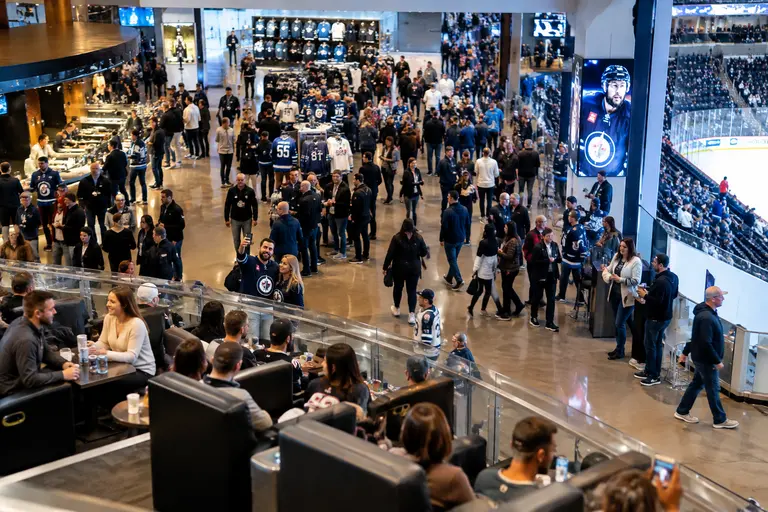
The official Avalanche release said the renovation work was scheduled to begin in 2026 and be completed before the 2028-29 NBA and NHL seasons, with phased upgrades tied to entrances, concourses, premium areas and the east side of the building, according to the Avalanche renovation release. Those dates place the project in a multi-year window rather than a single offseason fix.
For attendance, that matters. Fans may see improvements gradually, and some game nights before completion may still carry the same friction points. The long-term test is whether the finished building helps fans spend more time in their seats and less time in lines, bottlenecks or crowded corridors.
- Wider entries and exits can reduce the stress of arriving close to puck drop.
- Concourse changes can cut down crowding during intermissions.
- Point-of-sale upgrades can limit the time fans miss live play and in-arena video.
- Premium spaces can change how early-arriving fans use the building before faceoff.
Premium clubs often get framed as a revenue issue, and that is part of the story. But for hockey attendance, they also affect crowd distribution. If some fans have better places to gather before the game or during breaks, pressure can ease in other public areas. That can help families, upper-level fans and occasional attendees who may be more sensitive to congestion than season-ticket regulars.
What Time Away From The Seat Costs
Hockey punishes delays. A fan who misses three minutes can miss a goal, a fight, an injury stoppage, a coach’s matchup or a replay review. The jumbotron helps fill gaps, but it cannot replace being connected to the rhythm of the game. Better fan flow is therefore not just comfort. It supports the core reason people enter the arena.
Our earlier look at Avs home nights made a similar point: the building’s physical upgrades and the Avalanche game presentation have to work together. A clearer screen package matters most when fans can actually see it, hear it and return to it quickly after leaving their seats.
Ball Arena Renovation And Avalanche Game Nights
Ball Arena Renovation should be measured by retention as much as attraction. The Avalanche already had strong late-October 2026 attendance in the research snapshot, so the risk is not that fans do not care. The risk is that high demand can make an older game-night setup feel strained. If crowding, screen visibility and wait times remain pain points, attendance may still be solid, but the lived experience can lag behind the ticket price and the team’s place in Denver sports culture.
The renovation’s promise rests on a practical chain. Better entrances can get fans inside earlier. Better concourses can reduce intermission pressure. Better payment systems can send fans back faster. Better premium and gathering areas can spread the crowd. Better screen readability can keep more people connected to the game, especially from upper-level and side-view seats.
There is still uncertainty because the research does not provide full jumbotron specifications or post-renovation seating policy. It is also too early, as of November 1, 2026, to prove an attendance effect from a project planned to finish before the 2028-29 NBA and NHL seasons. The safer reading is that Ball Arena Renovation gives the Avalanche and arena operator a chance to protect a strong fan base by making the in-person product clearer, faster and easier to share.
For Colorado hockey culture, that is the key point. Fans do not attend only to see a screen or walk through a wider door. They attend because the arena turns the sport into a community event. The jumbotron, the concourse and the crowd all feed that feeling. If the project improves those parts without weakening the live hockey focus, Ball Arena can remain a difficult place for opponents and a more reliable night out for Avalanche supporters.