

The Colisée Lewiston impact is best measured through sports use first: ice time, junior hockey, youth programming, public skating, and the local business activity that follows a busy arena calendar. On September 8, 2026, Recovery Management Group of Maine was announced as the new owner of The Colisée, with the property at 190 Birch St. having been purchased during the first week of September, according to the Press Herald report. For Lewiston, the ownership change was not just a real estate transaction. It was a test of whether a long-running sports venue could regain stability after months of uncertainty around prior sale efforts.
The Colisée sits in a part of Maine hockey culture where rivalry, local identity, and community access matter. A building like this does not need to host a top professional league to carry weight. It can shape player development, youth participation, weekend restaurant traffic, and the rhythm of a junior hockey schedule. That is the sports-business question now: whether new ownership can turn capital improvements and expanded programming into regular use without losing the rink’s hockey core.
Colisée Lewiston Impact And The Ownership Reset
The acquisition by Recovery Management Group of Maine followed a difficult stretch for the venue. Earlier in 2026, another proposed sale was structured around Mill Town Sports & Entertainment LLC buying The Colisée for $4.9 million. That plan included a $3.5 million loan from T&M Investments and a $1.4 million seller-held note owed to then-owner Darryl Antonacci. The Lewiston City Council was asked to guarantee that $1.4 million seller note, according to the March 3, 2026 Lewiston City Council agenda.
That earlier process matters because it frames the risk profile around the arena. The research record says T&M Investments later withdrew in April 2026, and a separate $250,000 city loan tied to the purchase was delayed. As of April 23, 2026, Mill Town’s owner said work was still being done daily to complete the sale. With that deal no longer the operative path by September, RMG’s completed purchase gave the venue a cleaner point of control.
Why Colisée Lewiston Impact Starts With Control
The first test for any arena ownership group is not a press conference promise. It is control of scheduling, maintenance, vendor relationships, and ice operations. The Colisée Lewiston impact depends on whether the new owner can protect regular hockey use while adding other events that fill dark dates. The research notes say upgrades were underway in early September 2026, including new lighting, a new Zamboni purchase, interior improvements, and plans for historical murals and newspaper-style wall displays tied to the venue’s heritage.
Those are not cosmetic issues alone. Lighting affects the quality of the game presentation. A reliable ice resurfacing machine affects skating conditions and event operations. Interior improvements influence whether families, players, and visiting teams view the arena as a credible home base. In smaller-market sports business, these details can separate a venue that merely survives from one that becomes a repeat destination.
Hockey Programming And Community Use
RMG has said existing programs will be maintained, including youth hockey and the Lewiston MAINEiacs. The research identifies the MAINEiacs as a Tier II junior hockey team in the United States Premier Hockey League’s NCDC, with players roughly ages 16 to 20. Their 2026-27 season was scheduled to begin on September 25, 2026. A Welcome Day event at The Colisée was held on September 13, 2026, before the season opener.
For the hockey audience, continuity is the strongest early signal. Junior hockey depends on routine: consistent practice slots, dependable game nights, travel-team planning, and a building that feels connected to the players’ development path. Youth hockey depends even more on predictability. Parents build weekly schedules around rink access, and local programs lose momentum quickly when ice availability becomes uncertain.
Junior Hockey, Rivalries, And Player Development
The competitive value of The Colisée is tied to more than who owns the building. A junior hockey rink becomes meaningful when rivalries return often enough for players and spectators to remember them. Physical, emotional games have always been part of hockey’s edge, but the useful sports-business lesson is broader: rivalry games create repeat demand. They give local spectators a reason to know opponents, track rematches, and treat the venue as part of the sporting identity of the city.
That is where the Colisée Lewiston impact can be felt at ice level. If the MAINEiacs keep a stable home schedule and youth programs continue using the building, the arena can support development while also giving local businesses predictable event traffic. The building’s hockey function should not be treated as nostalgia. It is the base inventory from which other programming can grow.
Venue Upgrades And Sports-Business Mechanics
The research notes list several near-term improvements: new lighting, a new Zamboni, interior upgrades, and historical displays. In venue finance, these are practical signals. They suggest attention to the game-day product, the athlete environment, and the spectator experience. None of those investments alone guarantees higher attendance or profitability, but they address the kinds of basic operating issues that can hold back an arena.
The Colisée has a capacity of nearly 4,000. That scale is large enough to matter for concerts, junior hockey, public skating, and civic events, but small enough that scheduling discipline is essential. Empty dates can weigh on fixed costs. A mixed event model can help, provided hockey is not pushed aside by one-off entertainment bookings. A useful comparison for facility-driven sports participation can be found through related recreation coverage at FSGolf, where venue access and repeat use are also central to how local sports communities form habits.
What Upgrades Can And Cannot Prove
A new Zamboni and better lighting can improve operations quickly, yet they do not answer every question. The research does not provide post-sale revenue projections, a completed event calendar, or attendance targets. That limits what can be stated with confidence. The fair assessment is that RMG has begun visible operational work and has stated an intent to maintain hockey while expanding public skating, concerts, and non-hockey events.
The caution is equally clear. Arena turnarounds require steady booking, cost control, and trust from local sports users. If youth hockey families and junior hockey stakeholders see consistent ice quality and communication, the venue’s sports base can strengthen. If improvements are uneven, the ownership change may be judged more slowly.
Economic Signals For Lewiston Businesses
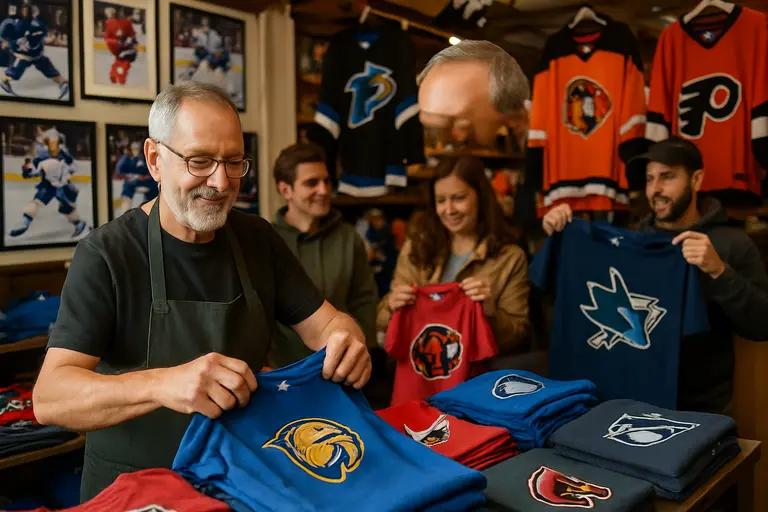
The research states that youth hockey in Lewiston accounts for approximately $1.2 million to $1.3 million in annual local economic activity. That figure is central to understanding why public officials and community members have cared about the sale process. Hockey events bring families, visiting teams, coaches, and spectators into the city. Those trips can touch restaurants, hotels, retail shops, gas stations, and other local services.
Event frequency is the key variable. A single large concert can create a visible spike, but a regular hockey schedule creates repeat spending. Public skating with rentals can also widen the building’s reach beyond organized teams. If RMG expands weekly public skating as stated in the research, The Colisée could serve both competitive hockey users and casual community participants.
- Youth hockey supports recurring local spending through practices, tournaments, and family travel.
- Junior hockey gives the arena a seasonal sports anchor from September through March, with playoffs afterward.
- Public skating can introduce new participants to the building without requiring team membership.
- Concerts and off-ice events can help fill dates when the rink is not booked for hockey.
The Colisée Lewiston impact should be tracked through this blend rather than through one headline event. The strongest model is not hockey versus entertainment. It is a balanced calendar where hockey protects the building’s identity and other events improve utilization.
Historical Identity And Arena Credibility
The Colisée’s past gives the ownership group something to work with. The research notes that the 1965 Ali-Liston fight is part of the venue’s heritage, and RMG plans to preserve and display elements of that past through murals and newspaper-style wall treatments. For a sports venue, history can help sell credibility, but only if current operations match the story being told.
Lewiston’s hockey audience will likely judge the new chapter through practical markers: ice quality, scheduling, team support, parking flow, concessions, cleanliness, and whether families feel the building is worth repeated visits. Historic displays can deepen the experience. They cannot replace a reliable game-night operation.
That is why this transition is a sports-business case rather than a simple venue sale. The building’s value is tied to use. The more often athletes, coaches, families, and spectators enter the arena for well-run events, the stronger the community case becomes.
The Colisée In Lewiston Under RMG Ownership
As of September 17, 2026, the clearest facts are these: Recovery Management Group of Maine owned The Colisée after a purchase completed in early September; prior sale efforts earlier in 2026 had run into financing and city-support questions; upgrades were underway; existing hockey programs were expected to continue; and the MAINEiacs’ 2026-27 season was scheduled to begin on September 25, 2026.
The Colisée Lewiston impact will not be settled by the first announcement. It will be measured across a full operating cycle: junior hockey nights, youth hockey schedules, public skating sessions, concerts, and the response from local businesses around the arena. The early direction is constructive, but the evidence still calls for caution. New ownership has given the venue a defined path. The next test is whether that path produces steady sports use, stronger community access, and a building that again feels central to Lewiston’s competitive identity.